

103 - We can be helpful without being experts
A quiet request for quiet support.

Welcome back! or welcome!
Everyone’s an expert.
That’s how the world feels right now.
If I have an experience, or better, if I know about one person having an experience. Or better, if I hear that one person heard about this one person that had an experience, I am an expert.
The other day, I heard this exchange in a podcast, talking about the really hard days that happen in grieving:
Guest: Those days you need to call in every person that you have …
Host: really!
Guest: …and everything that you need. At least I did.
Host: I would too, I think you should
Guest: I can't speak for everybody, and you may not [need everyone]. You may need to go it solo.
It was an unusual moment of humility for a grief memoirist.
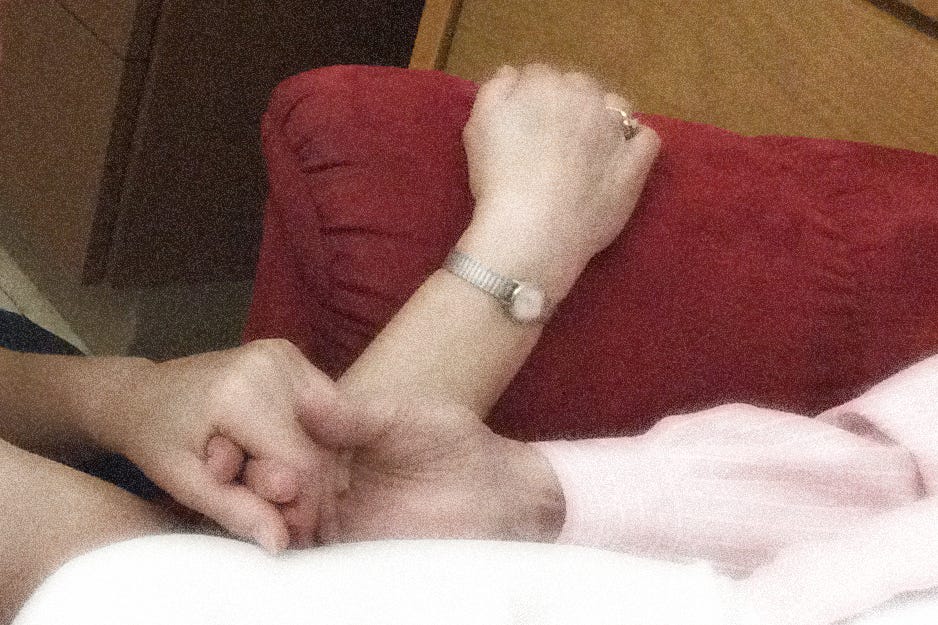
It echoed the words of a friend who is journeying a parent home (which means that her mom is dying).
“Talk about how to respond to the person who thinks the experience they had is the experience I am having. What if I didn't ask the question that they are trying to give me an answer for? I want to be gracious but...I may not be at the "top of my game."1
And another story. I knew this whole family, both parents, one child. The time came for a parent to move to memory care. And people who knew the parent said, “But let me visit, maybe I can break through to them.” And they said, “But wouldn’t it be more compassionate for them to be at home.”
My friends were providing constant care for activities of daily living. They were in danger of fatigue, of wandering, of violence.
And people were so not helpful.
All the time, I hear “Here’s what worked for me (or my cousin’s mother-in-law) so you should do it to.”
Here’s the hard part, at least for me. These comments are coming from people I know. These comments are coming from well-meaning church(y) people.
+++
And so, an invitation to listen.
Perhaps the most helpful thing for us to do, when we are following up with friend who are having a hard time, particularly before or after a death, is to listen to them.
To listen all the way to the question, if there is one. And be okay if there isn’t a question.
To enter into their struggle before we offer our answer.
To assume that they are trying everything they know and to affirm more than recommend.
To refrain from sharing odd things.
To trust our friend more than we trust something we’ve noticed while scrolling the internet.
To recognize that situations and personalities and diagnoses are different and invite humility on our part.
To pretend that we are talking with people, not making comments to posts on Facebook.
To offer hospitality, the kind that doesn’t make them feel like they have failed because they haven’t done the thing you are suggesting. The kind that doesn’t make them feel like they have to entertain or comfort or support you.
I know. It’s hard to be an expert. And it’s hard to feel like you don’t know what to say or how to help. But it’s hard to be a grieving caregiver, too.
So, I give you permission to be kind. To each other. To yourself.
See you next week.
Jon
Between the time I wrote this and the time I’m publishing it, my friend walked her mom all the way home.